What to check before replacing a modular belt
Pitch, surface, material and sprocket fit all matter when identifying a replacement belt.
Identify the installed belt
Photograph the top and underside of the belt and record any series number. Measure the pitch, overall width and hinge arrangement before comparing catalogue options.
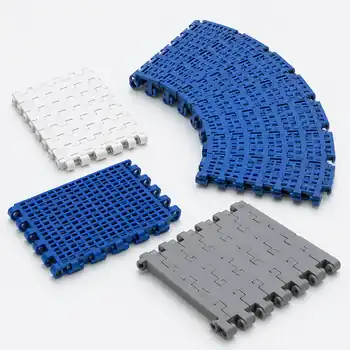
Flat-top, perforated, flush-grid, raised and rubber-top surfaces are designed for different handling needs. The smallest product and the transfer geometry help determine which surface can work.
Check the drive and operating conditions
Confirm that the proposed belt matches the installed sprockets. Inspect tooth condition and alignment so a new belt does not inherit an existing tracking or engagement issue.
Temperature, cleaning chemicals and food-contact requirements depend on the exact material. Ask for the relevant specification rather than assuming every plastic modular belt has the same properties.
Send a complete replacement enquiry
Share belt photographs, dimensions, the current series if known, sprocket details and a brief description of the product being carried. This gives the team enough context to narrow down a compatible option.